
THE RIGHT SPECIFICATION FOR THE EXPORT-READY VEHICLES
One of the first checks is whether the export-ready vehicle spec matches the target market. Left-hand-drive vehicles may be required in many countries. Some markets also set rules for emissions, safety gear, engine size, or body setup.
Even small spec changes can matter. Transmission type, seat count, body style, drive setup, and available features should all be checked before export.
ENGINE AND FUEL TYPE MATTER FOR EXPORT-READY VEHICLES
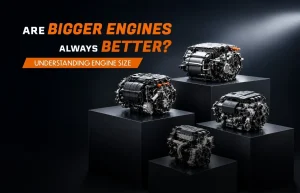
The best engine is not always the biggest or the most powerful. It should suit the place and the job.
Diesel engines can be a smart choice for buyers who need strong low-speed pull, long trips, or regular heavy use. Petrol engines may work better where fuel is easier to find or where smooth city driving matters more. Hybrid vehicles can also be a good fit where fuel use and city driving are top concerns.
In the end, the best powertrain is the one that fits the target market.
2WD OR 4WD? THE ROAD DECIDES
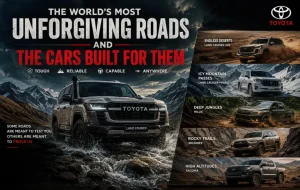
A vehicle built for cities and paved roads may not need the same drive setup as one that must handle rough roads, sand, steep hills, or bad weather.
For hard use, 4WD can add grip and confidence. But 2WD can be the better choice when the vehicle stays on paved roads and fuel use or lower running costs matter.
The real question is which setup works best for the road ahead.
CLIMATE CAN CHANGE THE NEEDS FOR EXPORT-READY VEHICLES
A vehicle sent to a hot, dry place may face very different stress than one used in cold or mountain areas.
Heat can put more load on cooling and air-con systems. Dust can make filters and upkeep more important. In cold places, the engine, battery, tires, and other parts may need to cope with low temperatures and hard road use.
So climate should always be part of the vehicle export choice.
DURABILITY IS MORE THAN JUST STRENGTH
Export-ready does not just mean built tough. It means a mix of durability, utility, easy service, and the right specs.
A vehicle may travel thousands of kilometres after export, so access to service, parts, and trained techs matters. Models with a wider global reach may have an edge because parts and service are easier to find.
For fleet owners and business buyers, this can matter as much as the first price.
PAYLOAD, SPACE, AND PURPOSE
A vehicle should also be chosen based on how it will be used.
A family SUV, a work pickup, a passenger van, and a long-range fleet vehicle all need different things. Payload, seats, cargo room, tow ability, ground clearance, and size can all decide if a model truly fits the job.
Choosing by looks or fame alone can lead to the wrong spec.
TRANSMISSION AND DRIVE SETUP
Transmission choice can also shape how well a vehicle fits an export market.
Automatic gearboxes give ease, especially in heavy traffic and city use. Manual gearboxes may suit buyers who want more control, less complexity, or certain operating needs.
Drive setup should also match the roads. A highway vehicle does not always need the same setup as one that will often face rough or unpaved terrain.
SAFETY AND PRACTICAL FEATURES
An export-ready vehicle should also have the safety and convenience features that fit its use.
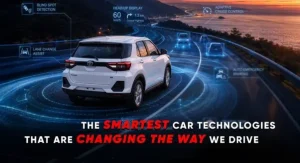
ABS, stability control, airbags, hill-start assist, parking aids, climate control, and modern driver displays can all improve safety and day-to-day use. But the best feature list depends on the market and the job.
More features do not always mean a better vehicle. The aim is to have the right features for the right place.
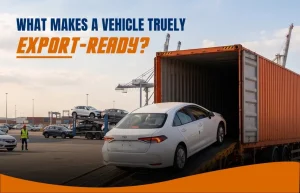
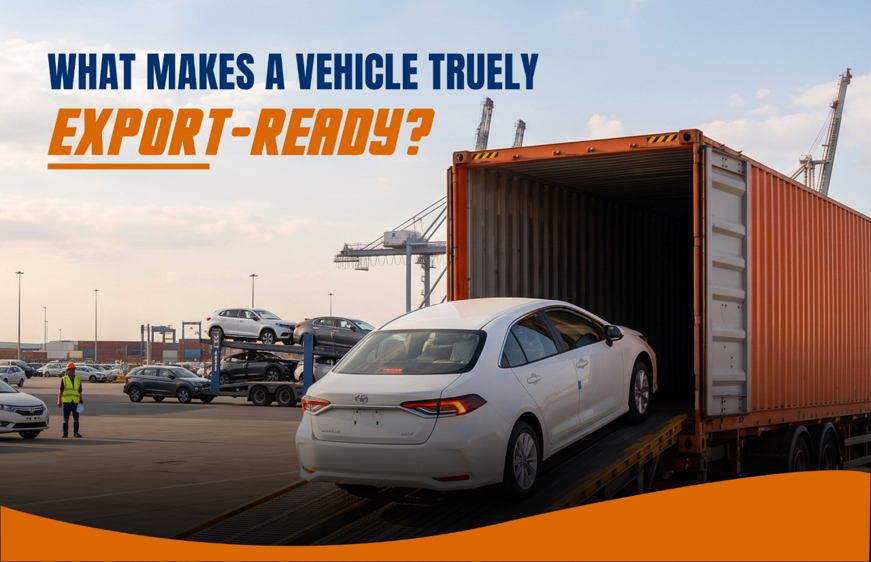
SO, WHAT MAKES A VEHICLE EXPORT-READY?
There is no single spec that makes every vehicle export-ready.
Instead, it is the mix of the right vehicle, the right spec, and the right destination.
An export-ready vehicle should handle its roads, climate, fuel needs, workload, and driving style while staying easy to maintain and run.
For international buyers, the smartest choice is not always the newest, biggest, or most powerful model. It is the one that still makes sense after it reaches its destination.
At Forex Motors, we know that international buyers need more than a car. They need a vehicle that fits the trip ahead. From spec and drive setup to practical use and destination needs, the best choice starts with knowing where it will go. For Dubai car buyers and other vehicle export customers, that fit can make all the difference.