
The way people buy cars has changed more in the last five years than in the previous fifty. Showroom visits are declining. Newspaper classifieds are relics. In their place, a new buying journey has emerged, one that starts on a phone screen, plays out across multiple platforms, and often results in a purchase decision being made before the buyer ever speaks to a salesperson.
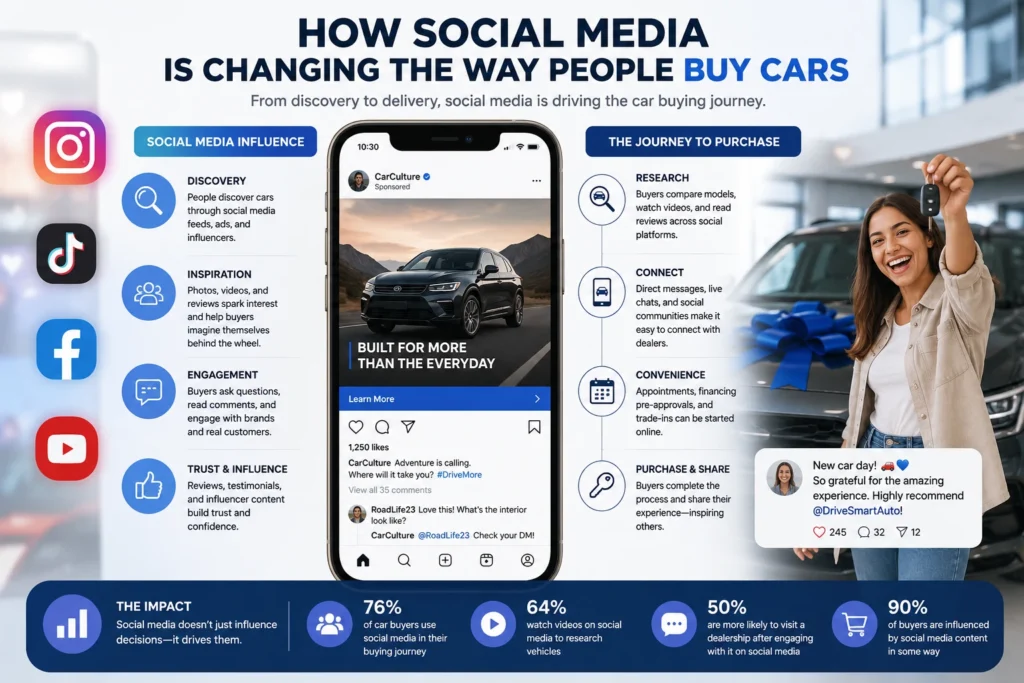
Social media is at the centre of this transformation. From Los Angeles to London, from Dubai to São Paulo, from Seoul to Lagos, buyers are using Instagram , YouTube , TikTok, Facebook, and X to discover vehicles, research options, verify dealers, and build the confidence they need to make one of the largest purchases of their lives.
The Buying Journey Has Been Inverted
The traditional car buying process was simple: see an ad, visit a dealership, trust the salesperson, make a decision. The seller controlled the information. The buyer had limited independent resources.
That model has been almost completely reversed.
Today’s buyer arrives at the dealership, if they visit at all, having already spent hours researching online. They know the vehicle’s specifications in detail. They have watched multiple video reviews. They have a clear sense of fair market pricing. They have read community feedback and owner forums. Research across major automotive markets consistently shows that buyers now complete between sixty and seventy percent of their purchasing decision before contacting a dealer. Social media accounts for a growing share of that pre-purchase research time.
YouTube: The World’s Largest Car Review Platform
YouTube has fundamentally changed how people research vehicles. Independent automotive channels, from large operations like Carwow and Motor Trend to smaller specialist creators have built audiences of millions by providing honest, unscripted assessments that buyers trust precisely because they do not come from the manufacturer.
A potential buyer can watch a detailed walkaround of the exact vehicle they are considering, see it driven in real conditions, and hear honest assessments of its weaknesses alongside its strengths, all before spending a single dollar. Long-term ownership videos, where creators document their experience over one to three years of real use, carry particular weight with buyers who want the truth rather than the marketing version.
For buyers considering an imported or exported vehicle they cannot physically inspect before purchase, this independent video access is genuinely transformative.
Instagram: The Digital Showroom
Instagram has become the primary visual platform for vehicle discovery and dealer evaluation. For luxury and aspirational vehicles, it functions as a desired machine building brand aspiration over months and years before a buyer is financially ready to purchase. For mainstream and commercial vehicles, it serves a more practical function.
Dealers and exporters who post actual inventory real photographs of real vehicles, including interiors, engine bays, and specification details allow buyers to conduct a meaningful visual assessment without visiting in person. For international buyers purchasing vehicles for export, this is especially valuable. A fleet manager in Riyadh sourcing vehicles from Dubai, or a business owner ordering a specialist vehicle from overseas, can evaluate stock via Instagram before any formal enquiry.
Instagram Stories and Reels add a real-time dimension. Dealers who post video walkarounds and behind-the-scenes shipping content create a transparency that builds trust in ways static listings simply cannot.
TikTok: The Platform Reshaping Discovery
TikTok’s entry into automotive content has been one of the more surprising developments of recent years. Its algorithm delivers content to users based on demonstrated interest, meaning automotive content finds car enthusiasts who were not actively searching for it. A user who watches two or three car videos soon finds their feed populated with reviews, comparisons, dealer tours, and owner testimonials.
This passive discovery function is powerful. It plants purchase ideas and builds brand awareness in an audience that was not yet in buying mode. The professional in their late twenties watching Fortuner or RAV4 content on TikTok for three months before they are ready to buy has already been significantly influenced by the time they make contact with a dealer.
For dealers, TikTok represents a younger, digitally native audience that is deeply sceptical of traditional advertising and actively seeks unfiltered, honest perspectives. Brands that establish a genuine TikTok presence now are building relationships with the buyers who will dominate the market over the next decade.
Facebook: Community, Marketplace, and Targeted Reach
Facebook’s power in car buying lies in the community. Groups dedicated to specific vehicle models, brands, or buying communities bring together thousands of active members who share real experience, technical advice, dealer recommendations, warnings about bad practices, and honest assessments of specific models.
The peer review function is particularly significant for high-value purchases. A buyer considering spending thirty or forty thousand dollars on an imported vehicle can post a question in a relevant Facebook group and receive responses from dozens of people who have made exactly that transaction, with the same dealer, the same model, or through the same shipping route. This kind of community verification simply did not exist a decade ago.
Facebook’s advertising platform also remains one of the most sophisticated targeting tools available to vehicle dealers and exporters, allowing businesses to reach buyers in specific countries, cities, and interest categories with messaging that speaks directly to their situation.
The Rise of the Automotive Influencer
Across all these platforms, a new category of trusted voice has emerged, the automotive influencer. These are individuals who have built substantial audiences through consistent, credible content, and whose recommendations carry measurable influence over purchasing decisions.
The most effective are not celebrities. They are typically enthusiasts or former industry professionals whose credibility comes from demonstrated knowledge and genuine passion. Their audiences trust them to give honest assessments even when those assessments are negative, and that trust, built over years, is worth more to a car brand than almost any traditional advertising placement.
The Risks: Misinformation and Fraud
An honest assessment must acknowledge the risks. The same platforms that empower buyers also provide tools for fraudulent operators to construct convincing false identities. Fake dealership accounts with stock photography, purchased followers, and fabricated testimonials have defrauded buyers in markets around the world.
Experienced buyers protect themselves by cross-referencing dealers across multiple platforms, seeking independent community verification in Facebook groups, requesting live video calls to confirm the physical showroom and inventory are real, and independently verifying bank details before any transfer. Legitimate dealers welcome this scrutiny. Fraudulent ones resist it.
The Road Ahead
Social media’s role in car buying will continue to deepen. Augmented reality vehicle previews, AI-powered buying assistants, and live interactive shopping events are already being tested by forward-thinking dealers and manufacturers globally.
For buyers, this shift is unambiguously positive. Independent information, peer verification, and visual transparency have made it possible to make better purchasing decisions with greater confidence than ever before. For dealers and exporters with genuine inventory and real track records, it is equally positive, social media gives legitimate businesses the tools to build verifiable, visible reputations that reach buyers across the world who would never have found them through traditional channels.
The car buying journey has moved online. The businesses that invest in it with genuine transparency are the ones that will define the market for the next decade.